| Welcome, Guest |
You have to register before you can post on our site.
|
| Forum Statistics |
» Members: 2,795
» Latest member: kidwinj
» Forum threads: 7,059
» Forum posts: 123,415
Full Statistics
|
| Latest Threads |
Odds and Ends ... With So...
Forum: The Lounge
Last Post: IceWizard
11-13-2026, 01:20 AM
» Replies: 11
» Views: 3,028
|
Here are a couple I found
Forum: IOPList Suggested IOP's
Last Post: gujjernoran
11-12-2026, 08:26 PM
» Replies: 1
» Views: 758
|
www.MacroMass.COM.PH
Forum: IOPList (Approved & Recommended)
Last Post: Macro Mass
11-11-2026, 04:56 PM
» Replies: 3,854
» Views: 7,121,289
|
The Juke Box is OPEN
Forum: The Lounge
Last Post: Mr. HIND
11-09-2026, 08:03 AM
» Replies: 2,939
» Views: 1,648,894
|
MOVIES
Forum: The Lounge
Last Post: IceWizard
11-09-2026, 05:10 AM
» Replies: 147
» Views: 48,355
|
www.MacroMass.COM.PH
Forum: IOP Discounts, Offers & More
Last Post: Macro Mass
11-08-2026, 09:07 PM
» Replies: 143
» Views: 79,698
|
Humorous Smilies
Forum: The Lounge
Last Post: IceWizard
11-02-2026, 01:22 AM
» Replies: 4,936
» Views: 4,244,158
|
Deaths So Far (and it's j...
Forum: World News
Last Post: IceWizard
10-31-2026, 07:15 PM
» Replies: 51
» Views: 14,374
|
'Biscuit' the dog is late...
Forum: World News
Last Post: IceWizard
10-31-2026, 06:16 PM
» Replies: 0
» Views: 136
|
GAME - Change one word ga...
Forum: The Lounge
Last Post: IceWizard
10-15-2026, 05:21 AM
» Replies: 2,142
» Views: 1,011,233
|
|
|
| New Yorkers ingesting household cleaners |
|
Posted by: Charon - 04-25-2020, 09:40 PM - Forum: World News
- Replies (6)
|
 |
A spike in New Yorkers ingesting household cleaners following Trump’s controversial coronavirus comments
hxxps://www.nydailynews.com/coronavirus/ny-coronavirus-new-yorkers-household-cleaners-trump-20200425-rnaqio5dyfeaxmthxx2vktqa5m-story.html?fbclid=IwAR3vgHVICuyTJnPR8h-o6gx-D4aTiYpDsbgwwgilZ-beFkjuGSaS4oJNe3s&fbclid=IwAR21Yb-Wk-dwFfuW5yKVR10Rz81pO4nfT6zg5OGorDqxkVQVNXsoCdvLE3I
00:01
02:22
In last year’s 18-hour period, there were no cases reported about Lysol exposure and only two were specifically in regards to bleach, the data shows.
During Thursday night’s coronavirus briefing at the White House, Trump suggested doctors may be able to cure coronavirus by injecting disinfectants like bleach directly into the lungs of their patients.
"Because you see it gets in the lungs and it does a tremendous number on the lungs so it’d be interesting to check that … It sounds interesting to me,” Trump said, turning to his health advisers and asking them to look into the matter.
The Onion predicted Trump’s suggestion that disinfectants might kill coronavirus »
On Friday afternoon, following widespread pushback from medical experts, Trump claimed his dangerous suggestion was a joke.

"I said it sarcastically,” Trump told reporters in the Oval Office.
Despite Trump’s sarcasm defense, health and emergency agencies took his comments seriously and warned people against listening to the president.
“To be clear, disinfectants are not intended for ingestion either by mouth, by ears, by breathing them in any way, shape or form,” New York City Health Commissioner Oxiris Barbot tweeted. “Doing so can put people at great risk.”
EDITORIAL | Public service announcement: On disinfectant, the coronavirus and President Trump »
A White House spokesman demurred Friday night when asked for comment on the Big Apple’s spike in possible cases of household product poisoning in the aftermath of Trump’s comments.
“The media has lost control with their mischaracterizations and outlandish headlines about what the president said, and completely ignore that he has consistently emphasized that Americans should consult with their doctors regarding coronavirus treatment,” said the  pokesman, Judd Deere.
Edit: U r dealing with a large number of terrified people. got no money for doctors. doctors dont test us. and treAtment is not wise at this time. But a President should know that people, so desperate with fear, would trust their AmericAn President. Maybe we never could trust a president but i was raised to believe differently.
He must watch what the hell he says. Does not even ask How are they? any die? no, he says he was being sarcastic.
|

|
|
| Chinese doctors’ skin turns dark after coronavirus recovery |
|
Posted by: IceWizard - 04-25-2020, 08:09 PM - Forum: World News
- Replies (1)
|
 |
Chinese doctors’ skin turns dark
after coronavirus recovery
April 21, 2020 | 10:27am
Two Chinese doctors who were infected with the coronavirus while
treating patients in the epicenter city of Wuhan survived the deadly
illness – but their skin turned very dark after they were placed on life
support, according to a report.
Dr. Yi Fan and Dr. Hu Weifeng, both 42, were both diagnosed with
COVID-19 on Jan. 18 while working at the Wuhan Central Hospital,
the UK’s Metro reported.
The gravely ill physicians were taken to the Wuhan Pulmonary Hospital
and then transferred twice, according to state broadcaster CCTV.
The two men’s changed skin color was attributed to a hormonal imbalance
after their livers were damaged by the bug, Chinese state media reported.
 Dr. Yi Fan, Dr. Hu Weifeng
But one doctor suspected that their skin turned dark due to a specific drug
they received at the beginning of their treatment.
Yi, a cardiologist, was hooked up to an
ECMO (extracorporeal membrane oxygenation)
life support machine for 39 days.
The machine, which is similar to the heart-lung bypass machine
used in open-heart surgery, pumps and oxygenates a patient’s
blood outside the body.
“When I first gained consciousness, especially after I got to
know about my condition, I felt scared. I had nightmares often,”
Yi told CCTV from his hospital bed.
Hu, a urologist, has been bedridden for 99 days and is still very
weak after undergoing ECMO therapy from Feb. 7 to March 22,
according to his physician, Dr. Li Shusheng.
He only regained his ability to speak on April 11, said Li, who
added that the doctors’ normal color is expected to return when
their liver functions improve.
Yi and Hu both worked with whistleblower Dr. Li Wenliang, who
was punished for sounding the alarm over the coronavirus and
died of the illness on Feb. 7.
Both men are receiving mental health support as a result
of their traumatic experiences.
|
|
|
|
| Smoking Gun FBI Emails on Anti-Trump Plots |
|
Posted by: IceWizard - 04-25-2020, 01:57 PM - Forum: World News
- No Replies
|
|
 Emails Suggest Obama FBI Knew McCain Leaked Trump Dossier
We are getting more insight into the thinking of the corrupt FBI officials
involved in the plot against Donald Trump – in particular what they knew
and when they knew about the smear/leak operation using the shady “dossier.”
Our new understanding comes from 138 pages of emails between former
FBI official Peter Strzok and former FBI attorney Lisa Page.
These include an email dated January 10, 2017, in which Strzok said that the
version of the dossier published by BuzzFeed was “identical” to the version
given to the FBI by McCain and had “differences” from the dossier provided
to the FBI by Fusion GPS co-founder Glenn Simpson and Mother Jones
reporter David Corn. January 10, 2017, is the same day BuzzFeed published
the anti-Trump dossier by former British spy Christopher Steele.
The emails also show Strzok and other FBI agents mocking President Trump
a few weeks before he was inaugurated. In addition, the emails reveal that
Strzok communicated with then-Deputy Director Andrew McCabe about the
“leak investigation” tied to the Clinton Foundation
(the very leak in which McCabe was later implicated).
We received the records in our January 2018 FOIA lawsuit filed after the DOJ
failed to respond to a December 2017 request for all communications between
Strzok and Page (Judicial Watch v. U.S. Department of Justice (No. 1:18-cv-00154)).
The FBI has only processed the records at a rate of 500 pages per month and
has refused to process text messages. At this rate, the production of these
communications will not be completed until at least late 2021. The FBI is
now using the coronavirus as an excuse to shut down the production of any
further records.
On January 10, 2017, Strzok, under the subject “RE: Buzzfeed published some
of the reports,” writes: “Our internet system is blocking the site. I have the
pdf via iPhone, but it’s 25.6MB. Comparing now. The set is only identical to
what [Sen. John] McCain had
(it has differences from what was given to us by Corn and Simpson).”
Strzok sent the email to Page and several top-ranking FBI officials, including
Deputy Director Andrew McCabe, Assistant Director for the Counterintelligence
Division Bill Priestap, Deputy Assistant Director of Counterintelligence
Jon Moffa, Assistant Director for Public Affairs Michael Kortan, General
Counsel James Baker, and Director James Comey’s Chief of Staff James Rybicki.
Earlier, on January 10, 2017, BuzzFeed published a version of the dossier
that Strzok said was “identical” to what McCain’s office had turned over to
the FBI. Strzok sent the BuzzFeed-related email at 7:48 PM. At 8:23 PM on
the same day, Strzok forwards to Page and several FBI officials an article by
the UK outlet The Guardian titled “FBI chief given dossier by John McCain
alleging secret Trump-Russia contacts.”
David Corn was one of Steele’s media contacts. Fusion GPS paid Steele,
via funds from the Democratic National Committee (DNC) and Hillary Clinton’s
campaign, to write the dossier. In testimony to the Senate Judiciary Committee
in August 2017, Simpson said he was not aware of any version of the Steele
dossier being given to the FBI.
While acknowledging he had given the dossier to the FBI, McCain had denied
being the source of the dossier report. But court filings unsealed in March 2019
show the Arizona Republican senator and an associate had shared the dossier
with several media outlets.
Former State Department official and McCain associate David Kramer said in a
December 13, 2017, deposition that the dossier was given to him by Steele
and he then provided it to journalists at outlets includingCNN, BuzzFeed and
The Washington Post. The details were first reported by The Daily Caller.
The new records also include a December 22, 2016, email in which Strzok asks
then-Deputy Director Andrew McCabe if the FBI had opened a “leak investigation”
into Clinton Foundation media reports. Strzok writes: “I received word via Jen
that tomorrow morning Mike S [presumably Executive Assistant Director
Michael Steinbach] wants to talk about whether we have opened a leak
investigation into the publicity surrounding the C Foundation. He said he’d
like to discuss, as the D [Director James Comey] ‘would like to do something.’
I need guidance as to how/if you’d like me to detail the media pull we conducted.
As you may recall, we have not detailed that activity other than to you and Bill.
” McCabe’s reply to Strzok is redacted.
McCabe was fired from the FBI in March 2018 for leaking to the media and
lacking “candor.” A February 2018 DOJ inspector general report concluded
“that McCabe’s disclosure of the existence of an ongoing investigation …
violated the FBI’s and the Department’s media policy and constituted
misconduct.” McCabe was referred for prosecution but the
Justice Department declined.
The documents also include several emails in which Strzok forwards
Russiagate-related news articles to Page and other FBI officials.
On January 1, 2017, Strzok forwarded to Moffa and another unidentified
official a New York Times article titled “Trump Promises Revelation on Hacking.”
The article discusses President-elect Donald Trump’s skepticism about
U.S. intelligence assessments of Russian hacking relating to the 2016 election.
Strzok cut and pasted a quote from the article in which Trump said,
“I don’t care what they say, no computer is safe. I have a boy who’s 10 years old;
he can do anything with a computer. You want something to really go
without detection, write it out and have it sent by courier.” The article mentions
that Trump said new information would be coming out the following Tuesday.
Strzok then says in his cover note, “I think the Tuesday surprise is all the
stuff [redacted] told him during the CI [counterintelligence] briefing. He DID
mention the stuff about his son and the computer password …” A redacted FBI
agent replies to Strzok, but the reply is also redacted. Another FBI agent
then responds, “To be accurate he called it a code word not a password.
Ha!” Strzok replies, “Funnies.”
On December 15, 2016, Strzok forwards to Page an article from
the Daily Mail reporting that a former British diplomat, Craig Murray,
claimed to have received emails that were stolen from the DNC and
John Podesta. Murray said he received the emails near the grounds of
American University in Washington, DC. The article says the emails were
from an inside DNC source, not Russians. Strzok writes in his cover note
to Page, “Shaddy sh*t at AU… ”.
On December 21, 2016, Strzok forwards to Page a link to a Defense One
article about Russian efforts to interfere in the U.S. presidential election.
Strzok cut and pasted a quote from former Acting CIA Director Michael Morell
in which Morell says, “To me, and this is to me not an overstatement,
this is the political equivalent of 9/11.”
On December 26, 2016, Strzok forwards to Moffa and an unidentified
Washington Field Office agent a Bloomberg article titled “Trump Aide
Partnered with Firm Run by Man with Alleged KGB Ties.” The article reports
that Trump adviser Gen. Michael Flynn, having partnered in 2016 with
Subu Kota, a man who pleaded guilty in 1996 to selling stolen biotech
material to an FBI agent posing as a Russian spy. Strzok forwards the article
to Page, saying, “See, look, I’m sharing… ”
On January 4, 2017, Strzok forwards to Page a 14-page white paper by the
Capital Research Center entitled “Conducting Foreign Relations Without Authority:
The Logan Act.” He had previously sent the same file to Office of
General Counsel attorney Trisha Anderson and to Priestap.
In a January 4, 2017, email thread a redacted official in the FBI’s Operational
Technology Division emails Strzok and Page: “The AD [Assistant Director] of
Cyber is apparently bringing up the idea of [redacted]. [Redacted] just
messaged me after being pinged by SF [likely the FBI’s San Francisco office].
He asked why this was coming up again, and he wants to talk to me about it
next week. Any recommendation on how to deal with this?” Pages replies,
“Why don’t you let Pete or Bill or I reach out to the AD of Cyber to let him
know how we got here [redacted]. It might then be worth [redacted].”
The official responds, “Perfect. That works for me and you can mention
that OTD brought it to you. My initial recommendation was for the AD to
reach out to you two, but I can only assume that message did not reach him.”
On January 9, 2017, in an email with the subject line “USIC report,”
[U.S. Intelligence Community] Strzok tells Page and a redacted official
“Per D’s request on Friday, NYO received a single copy of the influence
report from ODNI’s [redacted]; it is being maintained in the CD SAC’s
safe for PEOTUS [president-elect of the United States]/senior staff.”
On January 10, 2017, Strzok emails Page, Moffa, Priestap and Jennifer Boone
to say, “Per Rich [presumably Richard Quinn, formerly with the public affairs office],
CNN to publish C material today between 4 and 5. Page replies:
“We have lots of details from kortan [Asst Dir Michael Kortan of public affairs].
He will brief at the 3:45.” Strzok responds: “Can I maybe get a read out
vis a vis relationship with Brits etc?”
The significance of these new emails is that Strzok and his Obama FBI
colleagues knew almost immediately that McCain likely leaked the
infamous dossier. The emails also show that senior FBI officials had
contempt for President Trump and gossiped about its counterintelligence
briefing to him. The FBI under Comey and McCabe was a train wreck and,
given the ongoing cover-up of these docs, the agency hasn’t improved much.
This latest records release adds to the volume of material we’ve already
uncovered on the Strzok/Page machinations. Here is some of our previous
work in this area.
In February 2020, we uncovered an August 2016 email in which Strzok says
that Clinton, in her interview with the FBI about her email controversy,
apologized for “the work and effort” it caused the bureau and she said she
chose to use it “out of convenience” and that “it proved to be anything but.”
Strzok said Clinton’s apology and the “convenience” discussion were “not in”
the FBI 302 report that summarized the interview.
Also in February, we made public Strzok-Page emails showing their direct
involvement in the opening of Crossfire Hurricane, the bureau’s investigation
of alleged collusion between the Trump campaign and Russia. The records
also show additional “confirmed classified emails” were found on Clinton’s
unsecure non-state.gov email server “beyond the number presented” in
then-FBI Director James Comey’s statements; Strzok and Page questioning
the access the DOJ was granting Clinton’s lawyers; and Page revealing
that the DOJ was making edits to FBI 302 reports related to the
Clinton Midyear Exam investigation. The emails detail a discussion about
“squashing” an issue related to the Seth Rich controversy.
In January 2020, we uncovered Strzok-Page emails that detail special
accommodations given to the lawyers of Clinton and her aides during the
FBI investigation of the Clinton email controversy.
In November 2019, we revealed Strzok-Page emails that show the attorney
representing three of Clinton’s aides were given meetings with senior FBI officials.
Also in November, we uncovered emails revealing that after Clinton’s statement
denying the transmission of classified information over her unsecure email
system, Strzok sent an email to FBI officials citing “three [Clinton email] chains”
containing © [classified] portion marks in front of paragraphs.”
The coup cabal’s house of cards is looking more fragile by the day, thanks in
large measure to Judicial Watch.
Mexican Hospital Overrun by COVID-19 Closes Near Busy U.S. Crossing
President Trump rightly restricted border crossings on our Mexican and Canadian
borders to control the coronavirus contagion. Our Corruption Chronicles blog reveals
the threat to our health still lurking on our southern border.
COVID-19 is spreading like wildfire in Mexican cities along the United States border,
yet transit between the countries has increased dramatically, flouting State Department travel restrictions issued to keep the virus from spreading. A few weeks ago
Judicial Watch reported that southern border crossings are hotbeds of traffic that
are jeopardizing the health of federal agents charged with screening the influx and
potentially spreading the virus to American communities. The problem is only getting
worse, according to Customs and Border Protection (CBP) sources, who say traffic is
so bad that wait times in some crossings can take up to six hours. That is because
thousands in border states, especially Arizona, are taking daily jaunts to Mexico
to have lunch or dinner, shop, visit family and get haircuts in the middle of the
pandemic. Many return to the U.S. the same day, creating a gridlock that must be
screened by CBP officers.
In the Mexican city of Sonora, near the southwest Arizona town of San Luis,
COVID-19 is so rampant that an overwhelmed hospital was shut down not far
from the jam-packed San Luis border crossing. Mexican mediareports that a
nurse died at the facility, Hospital de San Luis Rio Colorado, and more than 30
doctors and nurses are sick with the virus. At least 20 doctors may also be infected.
Nevertheless, the San Luis crossing remains among the busiest along the southern
border, with consistently lengthy wait times. “It’s crazy busy,” said veteran CBP
agent Patricia Cramer, who also serves as president of the Arizona chapter of the
agency’s employee union. In the last few days wait times have spiked up to
six hours, according to agents who man the hectic crossing. This week the
shortest wait time has been over two hours, according to records provided to
Judicial Watch by agents in the sector. “That hospital that got closed is near the
busiest port along the southern border,” said Cramer who has been in contact
with the mayor of San Luis, a working-class town of about 34,000 adjacent to
the Colorado River. “He is very worried,” she said. “His town is going to get hit hard.” Quote:In El Paso, Texas, nine CBP officers have tested positive for COVID-19
and, though traffic in that sector has been lighter than in Arizona,
officials say there should be no cross border traffic considering a
big COVID-19 outbreak in nearby CiudadJuárez, Mexico. This week
Mexican officials report 140 COVID-19 case in Ciudad Juárez and
33 deaths. “Juárez is right across the border from us and they’ve
had more than 30 deaths,” said longtime CBP officer John Monahan,
who serves as president of the El Paso CBP union. “The border
needs to be shut down for a period of time,” Monahan insists.
“It defeats the purpose if you let people cross back and forth
over and over again.” Like many of his colleagues at the agency
Monahan is calling on the Department of Homeland Security (DHS)
to curb the flow of cross border traffic during the health crisis.
“I don’t think DHS cares about our health and safety,” he said.
“Agents are scared and there’s a lot of anxiety.”
Under COVID-19 protocols Mexican nationals are not allowed to
go back and forth via land crossings for non-essential travel, but
those with legal U.S. residency (green cards) and citizens cannot
be stopped. Cramer and her fellow agents are calling on elected
officials to help curb the non-essential cross border traffic, which
they say is a threat to the nation’s health and safety. That is
entry and ferries between the U.S. and Mexico during the pandemic.
The document published in the Federal Register states that the
risk of continued transmission and spread of COVID-19 between
the U.S. and Mexico poses a “specific threat to human life or
national interests” and therefore officials in both countries have
mutually determined that non-essential travel between the nations
“poses additional risk of transmission and spread of COVID-19.”
Essential travel is defined as American citizens and lawful residents
returning to the U.S., medical purposes, military or diplomatic
duties and lawful cross-border trade.
Court Orders Maryland to Release Complete Voter Registration Records
As the Left assaults election integrity with national pushes for unsecure
“vote by mail”, mass ballot harvesting, and an end to voter ID, your
Judicial Watch methodically works to ensure our elections are cleaner.
A federal court ordered the State of Maryland to produce the voter list
for Montgomery County that includes the registered voters’ date of birth.
This ruling is the latest victory for us in the lawsuit we filed on
July 18, 2017, against Montgomery County and the Maryland
State Boards of Elections under the National Voter Registration Act of 1993 (NVRA).
We filed suit for the Maryland voter list data after discovering that
there were more registered voters in Montgomery County than
citizens over the age of 18 who could legally register
(Judicial Watch vs. Linda H. Lamone, et al. (No. 1:17-cv-02006)).
Ruling in our favor, Judge Hollander said:
Judicial Watch need not demonstrate its need for birth date information
in order to facilitate its effort to ensure that the voter rolls are properly
maintained. Nevertheless, it has put forward reasonable justifications for
requiring birth date information, including using birth dates to find
duplicate registrations and searching for voters who remain on the rolls
despite “improbable” age.
In order to avoid turning over the dates of birth for Maryland voters,
the Maryland Administrator of Elections, Linda Lamone, directed her staff
to remove date of birth as a field on the voter registration application.
Judge Hollander ruled that Lamone could not do this, saying:
Because full voter birth dates appear on completed voter registration
applications, the Administrator may not bypass the Act by unilaterally
revising the Application.
In August 2019, Judge Hollander ruled in our favor in the same case,
ordering the State of Maryland to produce voter list data for
Montgomery County. She noted then:
Organizations such as Judicial Watch have the resources and expertise
that few individuals can marshal. By excluding these organizations from
access to voter registration lists, the State law undermines Section 8(i)’s
efficacy. Accordingly, [Maryland election law] is an obstacle to the
accomplishment of the NVRA’s purposes. It follows that the State law
is preempted in so far as it allows only Maryland registered voters to
access voter registration lists.
cont
The judge at the time also asked us and Maryland to brief the issue of access to birth
dates “more fully,” and reserved her ruling on that point. This recent ruling resolves
the last remaining issue in the case, allowing us access to full voter registration files
for Montgomery County registrants.
The dispute over the voter registration list arose from an April 11, 2017, notice letter
sent to Maryland election officials, in which we explained that Montgomery County
had an impossibly high registration rate – over 100 percent of its age-eligible citizenry.
The letter threatened a lawsuit if the problems with Montgomery County’s voter rolls
were not fixed. The letter also requested access to Montgomery County voter registration
lists in order to evaluate the efficacy of any “programs and activities conducted for the
purpose of ensuring the accuracy and currency of Maryland’s official eligible voter
lists during the past 2 years.”
Democrat Maryland officials, in response, went so far as to accuse us of being an
agent of Russia, an allegation they later dropped.
New federal data released in summer 2019 showed that the number of
Montgomery County’s voter registrations still appeared to be over 100 percent of
its age-eligible citizenry.
Maryland politicians fought tooth and nail to keep us from uncovering the full truth
about their dirty election rolls. This latest court victory will allow us to ensure that
Maryland and Montgomery County are removing voters who have moved or died long ago.
As you know, we are the national leader in enforcing the National Voters Registration Act.
Attorney Robert Popper is the director of our Election Integrity initiative.
We recently filed a lawsuit against North Carolina and two of its counties for failing
to clean their voter rolls. According to our analysis of voter registration data, many
of North Carolina’s 100 counties have large numbers of ineligible voters on their rolls.
We have also alleged that the States’ own data shows that North Carolina has nearly
one million inactive voters on its rolls.
In 2018, the Supreme Court upheld a voter roll cleanup program that resulted from
our settlement of a federal lawsuit with Ohio. California settled an NVRA lawsuit with
Judicial Watch and last year began the process of removing up to 1.6 million inactive
names from Los Angeles County’s voter rolls. Kentucky also began a cleanup of
hundreds of thousands of old registrations last year after it entered into a consent
decree to end another Judicial Watch lawsuit.
In December 2019, we provided notice to 19 large counties in five states that it intended
to sue unless they took steps to comply with the NVRA by removing ineligible registrations
from their rolls. In addition to North Carolina and Pennsylvania, Judicial Watch sent letters
to counties in California, Virginia, and Colorado. Our 2019 study of election data found
at least 2.5 million “extra” names on voting rolls across the country.
Our Campaign for Clean Elections
Judicial Watch’s work to protect and promote cleaner elections is wide, broad and successful. Micah Morrison, our chief investigative reporter, summarizes Judicial Watch’s historic efforts for election integrity:
With the presidential race heating up, election integrity is back in the news. Cheaters gonna cheat and there’s lots of ways to steal an election—dirty voter rolls, mail-in voting, and “ballot harvesting” are three areas ripe for abuse.
Judicial Watch is the national leader in election integrity education and litigation. The very notion of voter fraud is steeped in partisan bickering, but Judicial Watch President Tom Fitton insists electoral abuse is not “a Right-Left issue” at all. The Right may be leading the fight on election fraud, but “if you’re a Leftist Democrat trying to take on an incumbent in a corrupt jurisdiction,” Fitton says, “voter fraud can keep you from gaining traction as well.”
Judicial Watch is cleaning up dirty voter rolls across the nation. States are required by the National Voter Registration Act to remove so-called “inactive voters” from registration rolls if they do not respond to an address confirmation notice and then fail to vote in the next two general federal elections. Many “inactive voters” do this because, well, they’re dead. Or they have moved away.
Why does this matter? Leaving the names of inactive voters on registration rolls
creates opportunities for fraud, such as dead people voting or double voting.
Critics argue that these concerns are overblown, but sometimes it only takes a
few votes to swing an election.
And dirty voter roll numbers are not small. Here’s what we have uncovered:
In North Carolina, a Judicial Watch investigation revealed nearly one million inactive
voters on its rolls. That’s about 17% percent of North Carolina’s total voter registration.
Earlier this month, we sued North Carolina to clean up its act.
Recently in Maryland, a federal judge ordered Montgomery County to turn over its
voter rolls to Judicial Watch for analysis. Judicial Watch asked for the rolls after it
determined that county registrations had exceeded 100% of its age-eligible citizenry.
Read more about the Maryland case here.
We uncovered 1.6 million inactive voters on California voting rolls. In 2017, we sued
California and Los Angeles County to force a cleanup. Our investigation found that
Los Angeles County had more voter registrations on its rolls than actual voting age
citizens in the county, and that the entire state had a voter registration rate of
101% of age-eligible citizens. Last year, California capitulated, settling our lawsuit
and agreeing to remove inactive voters from its rolls.
We’ve been working to clean up Ohio voting rolls since 2012. In 2018, a
Supreme Court decision upheld an Ohio voter-roll cleanup that resulted from
settlement of a Judicial Watch lawsuit. The lawsuit found that the number of people
listed on voter registration rolls in three Ohio counties exceeded 100% of the total
voting age population.
We took on Kentucky. Our investigation found that 48 Kentucky counties—40% of the
state total—had more registered voters than citizens over the age of 18. Statewide,
we noted, the registration rate was higher than 100% of its age-eligible population.
We sued and won: a federal court directed Kentucky to clean up its rolls. Indiana
also agreed to clean up its rolls after Judicial Watch launched an investigation.
In February, we announced that our investigation in Iowa found 18,000 extra names
on voter rolls. Eight Iowa counties had more voter registrations than voting age citizens.
“Dirty voting rolls can mean dirty elections,” Tom Fitton noted. Iowa was apoplectic,
but offered no evidence that our count was incorrect.
And in a major new development, Judicial Watch announced in January that we
found at least another 2.5 million extra names on voter rolls across the country.
A Judicial Watch analysis of data released by the U.S. Election Assistance Commission
found that there are 378 counties in the U.S. that have more voter registrations than
citizens old enough to vote. The 378 counties had a combined 2.5 million extra
registrants over the 100%-registered mark. We’ve notified 19 counties in
five states—California, Pennsylvania, North Carolina, Colorado, and Virginia—that we
intended to sue unless they take steps to clean up their voter rolls.
Until next week,

|
|
|
|
| Muslims Begin a Subdued Ramadan |
|
Posted by: Charon - 04-24-2020, 05:34 PM - Forum: The Lounge
- Replies (1)
|
|
hxxps://apnews.com/bd5e4136bb9ddb33c0798c05c10032e0
General News
Muslims begin marking a subdued Ramadan under virus closures
By NINIEK KARMINI
an hour ago
1 of 28
Imams attend the Ramadan prayer at a mosque empty of faithful due to social distancing guidelines during the coronavirus outbreak in Zenica, central Bosnia, Thursday, April 23, 2020. The COVID-19 virus pandemic is cutting off the world's Muslims from their cherished Ramadan traditions. (AP Photo/Almir Alic)
JAKARTA, Indonesia (AP) — Muslims worldwide began Ramadan on Friday with dawn-to-dusk fasting, but many will have to forgo the communal prayers and family gatherings that make the holy month special, as authorities maintain lockdowns aimed at slowing the coronavirus pandemic.
Ramadan is usually a festive season, with the daylong fast followed by lavish meals and evening get-togethers. But this year many are confined to their homes, travel is heavily restricted and public venues like parks, malls and even mosques are shuttered.
Many are also weighed down by anxiety about the pandemic and widespread job losses resulting from the worldwide shutdowns.
“This is too sad to be remembered in history,” said Belm Febriansyah, a resident in the capital of Indonesia, the world’s most populous Muslim nation.
Jakarta is the epicenter of the outbreak in the country, which has reported more than 8,200 infections and 689 deaths. Passenger flights and rail services have been suspended, and private cars are banned from leaving the city.
Mosques in Indonesia’s deeply conservative Aceh province were packed, however, after its top clerical body ruled that it is not a “red zone” area and that prayers could continue. The province is governed by Islamic law under an autonomy agreement.
The virus causes mild to moderate symptoms in most people, who recover within a few weeks. But it is highly contagious and can cause severe illness or death, particularly in older patients or those with underlying health problems.
Muslim-majority countries began imposing widespread restrictions in mid-March, with many cancelling Friday prayers and shuttering holy sites. Saudi Arabia has largely locked down Mecca and Medina and halted the year-round umrah pilgrimage.
The Saudi-led coalition said it would extend a unilateral a cease-fire with Yemen’s Iran-aligned Houthi rebels through Ramadan. Fighting has continued, with each side blaming the other. The Houthi military spokesman, Yehia Sarea, accused the coalition of several violations on Friday, including 35 airstrikes, mostly on the strategic central province of Marib.
Muslim-majority Malaysia extended its own lockdown by two more weeks to May 12, although its daily virus cases have dropped significantly in the past week. The country now has 5,603 cases, including 95 deaths.
Malaysia’s Prime Minister Muhyiddin Yassin said in a televised speech on the eve of Ramadan that the “jihad,” or holy war, against the pandemic has shown results but must continue.
Malaysia, along with neighboring Singapore and Brunei, has banned popular Ramadan bazaars, where food, drinks and clothing are sold in congested open-air markets or roadside stalls. The bazaars are a key source of income for many small traders, some of whom have shifted their businesses online.
In Pakistan, Prime Minister Imran Khan has bowed to pressure from the country’s powerful clerical establishment and allowed mosques to remain open, even as the number of new cases has recently doubled to between 600 and 700 each day. Some clerics have ordered their followers to pack into mosques, saying their faith will protect them.
Pakistan’s southern Sindh province, however, banned Ramadan prayers after the Pakistan Medical Association pleaded with authorities to close mosques nationwide.
A key element of Ramadan is charity, with the fast partly intended to cultivate empathy for the needy. But many countries have imposed bans on communal meals, forcing charities to organize home deliveries instead.
In Turkey, authorities have banned the tradition of setting up tents and outdoor tables to provide free meals to the poor. It has also forbidden drummers from going door to door to wake people up for the pre-dawn meal in exchange for tips — another Ramadan tradition.
Last month, Turkey also banned communal prayers in mosques. Health Minister Fahrettin Koca tweeted that the month of Ramadan should not be “an excuse to relax precautions.”
“The month of blessings should not result in illness,” he said.
In Istanbul, Esat Sahin, the chief imam at Fatih Mosque, said it’s a very “lonely situation.”
“Our mosques are deprived of their congregation, like a child who has been orphaned,” he said. “Our hearts are very heavy because of this.”
In war-ravaged Afghanistan, lockdowns have compounded the suffering of the poor.
“The landlord wants rent and the children ask for food, and I don’t have answers for any of them,” Ahmed Shah said as he stood outside a supermarket with a one-wheeled cart, hoping to make money by helping people with their groceries.
Ismatullah, another Kabul resident, said he and his family of five had some bread and tea before the start of the fast. “We do not have anything for tonight,” he said.
More than 1,300 people have tested positive in Afghanistan, and 43 have died.
Ramadan in India, which begins on Saturday, has been marred by the rising Islamophobia following accusations that a surge in infections was tied to a three-day meeting in March in New Delhi of an Islamic missionary group, the Tablighi Jamaat.
Some leaders of India’s ruling Hindu nationalist Bharatiya Janata Party labeled the meeting as “corona terrorism.” As a result, many Muslims have faced renewed stigma, threats and the boycotting of vendors who venture into Hindu-dominated neighborhoods.
The lockdown in India, the world’s most draconian, has multiplied their troubles.
A group of over two dozen Indian Muslim scholars have appealed to their communities to strictly follow the lockdown and pray at home. They also asked Muslims to refrain from organizing large parties held for breaking the fast and “taraweeh,” the extended evening prayers traditionally held in mosques.
“Families should use this unprecedented situation for spiritual guidance and purification,” they said, while asking local volunteers and elders to look after the needy and destitute.
India’s 200 million Muslims, 14% of the population, are the largest minority group in the Hindu-majority nation, but they are also the poorest.
___
|
|
|
|
| Don't Drink Disinfectant |
|
Posted by: G.Elias - 04-24-2020, 03:29 PM - Forum: World News
- Replies (6)
|
 |
Don't listen to what the orange fool is telling you,drinking disinfectant will kill you,is anybody really that stupid to do such a thing?
Well millions voted for it so god knows,what an embarrassment to the world,holding the highest office and talking like a demented clown.
A new low has been reached,I don't think he cares about anyone but himself,narcissistic.
Hope you find someone better soon before it does more harm.
God help you all.Your going to need it.
|
|
|
|
| Authorization Code Mismatch Login Issue Fix. |
|
Posted by: ADMIN OF STEEL - 04-23-2020, 06:17 PM - Forum: Welcome
- No Replies
|
 |
For those of you having login issues please clear your Browser Cookies. Clearing the Cache does not clear your Cookies.
For Firefox please go to Tools>Options>Privacy & Security>Clear Data>Clear Cookies & Data.
For Chrome please go to Settings>Privacy & Security>Clear Browsing Data>Clear All Cookies & Data (Select & Clear All Time Browsing History).
For Microsoft Edge please go to Settings>Privacy & Services>Clear Browsing Data>Choose What To Clear>Clear All Cookies & Data (Select & Clear All Time Browsing History).
Once you have followed these steps please close your browser and reopen it and then try logging in again. Hopefully there won't be any issues. If the problem persists download CCleaner and clear all your system cache and then repeat the Browser Processes listed above and then try again. Hopefully after the first step there won't be any login issues. If anyone faces any further issues please feel free to contact me at AdminOfSteel@ProtonMail.CH.
Regards,
Admin Of Steel.
IOPList.ORG
|
|
|
|
| Suicide, help hotline calls soar in Southern California |
|
Posted by: IceWizard - 04-23-2020, 06:01 PM - Forum: World News
- Replies (1)
|
|
 Suicide, help hotline calls soar in
Southern California over coronavirus anxieties
Financial stress, social isolation, health concerns fuel
explosion of callers seeking support;
teens hit particularly hard  Counselors at Didi Hirsch Mental Health Services answer calls from individuals in crisis
at their Los Angeles call center. Calls about COVID-19 anxieties to their crisis lines
increased from 22 in February to 1,800 in March.
(Photo courtesy of Didi Hirsch Mental Health Services)
By DEEPA BHARATH
PUBLISHED: April 19, 2020 at 6:30 a.m
When Carolyn Levitan answered the phone, she heard the voice of a
man having a full-blown anxiety attack about possibly having
contracted coronavirus.
He was speaking rapidly. He was worried he had it, and feared
giving it to family members. He wondered if it would be alright
for him to pet his dog. And then he worried about dying and
leaving behind family because he knew others who had
died from the virus.
These are the types of panic-stricken calls Levitan has been
taking as crisis line director at Didi Hirsch Mental Health Services
in Los Angeles. Didi Hirsch is one of three centers in the nation
that takes calls on the suicide hotline as well the national
Disaster Distress Helpline that operates around the clock to
help victims of natural and man-made disasters deal with
emotional and mental health issues.
In February, Levitan and her colleagues — 70 full-time staff members
and 215 volunteers — took 22 calls on the suicide and
disaster helplines related to coronavirus. In March, that number
soared to 1,800 calls — more than an 8,000% increase.
Losing hope during the pandemic
What’s even more concerning is that a lot of the callers were already having suicidal thoughts, Levitan said.
“Suicidal thoughts stem from a sense of hopelessness, helplessness,
or lack of plans or goals for the future,” she said.
“The coronavirus pandemic has exacerbated those feelings
in people. If things felt bad before, they can really feel
hopeless in today’s environment.”
Levitan said she was able to calm down the anxious man who
called about a week ago by getting him to “focus on the here and now,”
as she does with others in a similar predicament.
Like the woman in her 90s who hadn’t eaten or drank water
all day because she was upset about not being able to go to
church on Easter Sunday or see her friends and family.
“I talk to them about what they can do today to take care
of themselves,” she said. “Do you want to lie down and take a nap?
Do you want to watch a YouTube video? When we take
little steps, it can make what feels like an insurmountable
situation more manageable.”
The man Levitan talked to decided he would take some time
to himself to calm down, and the elderly woman agreed to get
something to eat and talk to a few friends over the phone.
Levitan says that while a lot of these people who call in
crisis mode don’t talk about suicidal thoughts, they could
become suicidal if they don’t get timely support.
Ramping up for worse
Didi Hirsch, which operates 10 locations in Los Angeles and
Orange counties, is hiring and training more staff members to
take these hotline calls from remote locations because of
social distancing measures.
Other agencies also are ramping up for a significant increase in
the volume of calls to suicide and mental health hotlines.
Riverside County’s crisis and suicide helpline also has experienced
an increase in virus-related calls, said Rebecca Antillon,
a program coordinator with the county Public Health Department
who also runs its teen suicide awareness and prevention program.
“We’ve also seen a complexity of calls — individuals experiencing
economic stress, social isolation and increases in domestic violence
or abuse. At the same time, there is a decrease in access to
community and religious support.”
Antillon said she expects the call volumes to increase as the
response to COVID-19 continues and social distancing
mandates remain in place.
“We’re certainly looking for ways to ramp up resources
and preparation,” she said.
With school campuses closed, the county has moved its teen
suicide awareness and prevention efforts online, Antillon said.
In addition, the county has opened up a dedicated
support line (951-955-7015) for front-line health-care workers,
essential workers such as grocery store employees and
first-responders who may be struggling emotionally and need help.
The county’s mental health helpline (CARES) currently has 12 staff
members to answer phones and refer callers for care to the
Riverside University Health System’s contracted community provider
outpatient clinics, said Thomas Peterson, a spokesman for the
health system’s behavioral health division.
During the pandemic, the CARES line has as many as eight additional
clinicians on site to help with increases in call volumes, he said.
The call system also allows some staff members to work at home.
Helping vulnerable populations
While people in all age groups are struggling, this can be a tough time
for teenagers in particular, said Michelle Carlson, executive director
of Teen Line, a Los Angeles-based national and
international helpline for teens.
“In this environment, family relationships is the number one reason
youth are contacting us,” she said. “Young people are experiencing
huge increases in stress, anxiety and loneliness. We’re also seeing
a significant increase in child abuse reports. It’s very concerning.”
Teen Line is manned by 145 trained youth volunteers who are now
taking calls, under supervision, remotely through Zoom, Carlson said.
The majority of the call volume consists of texts and emails from
countries as far away as India, Australia and South Africa, she said.
“The most important thing right now is to approach your kids with
empathy,” Carlson said. “They are dealing with their own losses — not
being able to see friends or participate in school events like sports,
prom or graduation. This time is not normal and it’s OK to acknowledge that.”
Parents can be more relaxed when it comes to schedules and
engage youth in fun activities such as having a family dance party,
watching a movie or playing board games, she said.
“And really, the best thing you can do for your kids in these challenging
times is to listen to them.”
The Trevor Project, a national organization based in Los Angeles that
serves the LGBTQ community, says the volume of youth reaching out to
their crisis services programs has more than doubled since the
pandemic began, spokesman Rob Todaro said. Mentions of the
coronavirus have increased by more than 60 times over the past month,
now comprising a quarter of crisis services conversations
with LGBTQ youth, he said.
An unintended consequence of physical distancing is the potential loss
of the social connections that protect LGBTQ youth from
suicidal tendencies, Todaro said.
Coping with the crisis
When people are faced with a change that is unrelenting, monumental
and affecting different aspects of their lives, it is natural for them to
become stressed and anxious, said Jay Kumar, director of contemplative
practices and well-being at the Fish Interfaith Center at
Chapman University in Orange.
Kumar said there are steps everyone can take to overcome such anxieties.
“Take comfort in routine and regularity,” he said. “Stick to the time when
you wake up. Keep your lunch break. Make your gym time your workout time.”
It’s also important to connect to friends and family by harnessing
technology, Kumar said.
“One thing I do for my colleagues is have a weekly check-in,” he said.
“It can certainly help to hit the pause button because we’re constantly
bombarded with information and news from the media. Finally, be
compassionate to yourself and others — be it grocery store clerks or
your loved ones.”
On Thursday, April 16, Kumar kicked off a free, weekly
webinar series titled “Healthy Brain, Healthy Mind,” offering advice and
tools to promote emotional and mental well-being in the time of COVID-19.
The next webinar, from 3-4 p.m. April 23, will focus on ways to
manage work, family and life while self-isolating.
Adjusting and adapting
While there is no current data indicating a rise in suicides, suicide rates
historically have increased after economic downturns in the last century,
said Kita Curry, president and CEO of Didi Hirsch Mental Health Services.
“In a crisis, people are focused on basic needs like toilet paper, groceries
and staying healthy,” she said. “So they might not be thinking about ending
their lives. But as the economic struggles persist and long after we start
going to concerts and the movies, high suicide risk factors remain because
a lot of people would have suffered significant losses during the pandemic.
When you don’t know how to get your job back or house back, it’s erosive
in terms of your mental health.”
The coronavirus pandemic is different from almost all other natural disasters
because the counselors who are handling calls are experiencing the same
kinds of worries and anxieties as their callers, Levitan said.
“We always debrief after calls and take care of our staff,” she said. “We tell
people if they feel unsafe, they shouldn’t come in. I feel blessed to be able
to go in to the office and having that social connection with one another
while maintaining the physical distance. We turn to one another a lot for
support. This is the first time we’re all taking calls about what we’re
experiencing as well.”
Employees who do come in to the office take their temperatures before
entering their workplace, wear masks and sanitize their work stations.
“We have emergency plans for when our buildings burn down,” Levitan said.
“But, we never foresaw a situation where you would not be able to take
calls anywhere except your home. We’re adapting quickly, even training
people remotely.”
They are ready for increases in call volumes, she said.
Crisis lines and resources
Teen Line:
1-800-852-8336 or text “TEEN” to 839863
The Trevor Project: 1-866-488-7386,
via chat every day at TheTrevorProject.org/Help, or
by texting “START” to 678678
Didi Hirsch crisis counselor:
1-800-273-8255
National Suicide Prevention Lifeline:
1-800-273-8255
National Disaster Distress Helpline:
1-800-985-5990
Riverside County Suicide Helpline:
951-686-HELP (4357)
Riverside University Health System Behavioral Health:
CARES Line (1-800-706-7500); Substance Use CARES Line (1-800-499-3008);
dedicated crisis line for health-care workers, essential workers and first-responders (951-955-7015).
|
|
|
|
| If u can browse but not get admitted now |
|
Posted by: Charon - 04-23-2020, 05:49 PM - Forum: Suggestions & Technical
- No Replies
|
|
Only admin of steel is able to walk u through the admission. We upped security. Use his email:
AdminOfSteel@ProtonMail.CH
And please do not give me feedback for ur vendor to post for u. I shant do it.
I am in the epicenter of corona virus and i am taxing my non existant immune system enough already.
Your reviews can wait.
|
|
|
|
| $66 Mil, Federal Agents, National Guard Wasted on 2,500-Bed Camp |
|
Posted by: IceWizard - 04-23-2020, 02:40 PM - Forum: World News
- Replies (1)
|
|
$66 Mil, Federal Agents, National Guard
Wasted on 2,500-Bed Camp That
Averaged 30 Immigrants
APRIL 22, 2020|JUDICIAL WATCH
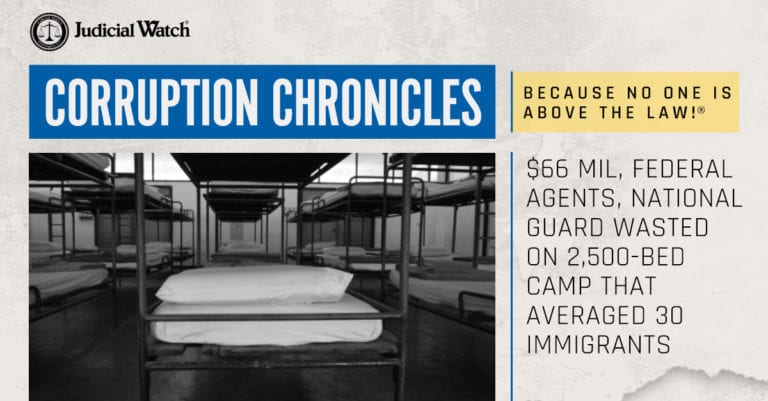 Against the advice of frontline agents, the federal government
opened a temporary immigration detention facility that was
barely used and cost a ghastly $66 million to operate for just
five months. During that time the tent encampment situated in
a rural west Texas community near the Mexican border housed
an average of just 30 detainees, according to a scathing
federal audit that blasts the Department of Homeland Security (DHS)
for the waste. Though it has a 2,500-person capacity, the facility
never held more than 66 illegal aliens on any given day,
investigators from the Government Accountability Office (GAO) found.
Not only did Customs and Border Protection (CBP) pay a private
contractor tens of millions of dollars in facility costs, it spent
“about $5.3 million for food services—the preparation and delivery
of meals and snacks—it did not need,” the congressional probe reveals.
In an enraging example, investigators write that, during the
first three months, the government paid for about 675,000
meals despite ordering only 13,428 because there were not
enough detainees. The U.S. also “leveraged significant
federal personnel resources” that added up to an additional
$6.7 million. This includes 75 unarmed guards to monitor the
camp around the clock and officers from DHS agencies
such as CBP, the Border Patrol (BP), Immigration and
Customs Enforcement (ICE) as well as soldiers from the
National Guard. Investigators did the math and figured that
each illegal immigrant detainee that stayed at the camp was
guarded by four soldiers, three security guards and at least
one CBP agent. The resources “could have been allocated
to other missions,” the GAO writes in its report.
Here is a breakdown of the federal officers wasted on this
seldom-used immigrant detention camp in addition to the
separately paid contract security guards. Twenty-one CBP
agents responsible for facility operations, such as detainee
intake, welfare checks and transportation, among other things.
Eleven BP agents from the El Paso sector, one of the nation’s
busiest, 10 CBP officers from the Office of Field Operations
and five ICE agents to help coordinate on decisions made
about individuals at the facility. On top of all that,
116 Texas National Guard soldiers were deployed to the
encampment for logistical support such as meal distribution
and monitoring security cameras, among other duties.
The facility in the El Paso County town of Tornillo was once
used to detain illegal immigrant minors and was briefly reopened
for single adults around the beginning of August 2019.
It finally closed at the start of 2020, but not without fleecing
American taxpayers. It’s not like the government didn’t have
opportunities to shut it down earlier. In fact, initially the camp
was only supposed to open for three months at a cost of
$47 million and could have been closed based on the numbers—less
than 1% of capacity. Instead, the feds extended the deal for
two months at a cost of $19 million. “Border Patrol officials in
the El Paso sector told us that the sector recommended to
Border Patrol headquarters that the facility be closed and
resources reallocated elsewhere for other CBP missions,
due to the consistently low numbers of individuals held at
the facility and the personnel resource requirements to
operate the facility,” the GAO report states.
But, as we regularly see in government, there is often little
consensus—or cooperation—among agencies, even when
they exist under the same umbrella. In this case the DHS,
the gargantuan agency created after 9/11 to prevent another
terrorist attack. Congressional investigators write that CBP
pushed to keep the Tornillo camp open though it was hardly used.
The 60,000-employee agency is charged with keeping terrorists
and their weapons out of the U.S. while facilitating lawful
international travel and trade and apparently it pulled more
weight than the frontline BP agents. “In contrast, CBP
headquarters officials told us, despite the consistently low
numbers of detainees held in the Tornillo facility, they decided
to continue operations for the 2,500-person facility because
they were operating in an environment with considerable
uncertainty related to migrant flow and wanted to prepare
for the possibility of increased apprehensions,”
the report says.
|
|
|
|
|


