| Welcome, Guest |
You have to register before you can post on our site.
|
| Latest Threads |
Odds and Ends ... With So...
Forum: The Lounge
Last Post: IceWizard
11-13-2026, 01:20 AM
» Replies: 11
» Views: 3,090
|
Here are a couple I found
Forum: IOPList Suggested IOP's
Last Post: gujjernoran
11-12-2026, 08:26 PM
» Replies: 1
» Views: 801
|
www.MacroMass.COM.PH
Forum: IOPList (Approved & Recommended)
Last Post: Macro Mass
11-11-2026, 04:56 PM
» Replies: 3,854
» Views: 7,145,458
|
The Juke Box is OPEN
Forum: The Lounge
Last Post: Mr. HIND
11-09-2026, 08:03 AM
» Replies: 2,939
» Views: 1,666,624
|
MOVIES
Forum: The Lounge
Last Post: IceWizard
11-09-2026, 05:10 AM
» Replies: 147
» Views: 49,645
|
www.MacroMass.COM.PH
Forum: IOP Discounts, Offers & More
Last Post: Macro Mass
11-08-2026, 09:07 PM
» Replies: 143
» Views: 81,228
|
Humorous Smilies
Forum: The Lounge
Last Post: IceWizard
11-02-2026, 01:22 AM
» Replies: 4,936
» Views: 4,274,283
|
Deaths So Far (and it's j...
Forum: World News
Last Post: IceWizard
10-31-2026, 07:15 PM
» Replies: 51
» Views: 14,573
|
'Biscuit' the dog is late...
Forum: World News
Last Post: IceWizard
10-31-2026, 06:16 PM
» Replies: 0
» Views: 165
|
GAME - Change one word ga...
Forum: The Lounge
Last Post: IceWizard
10-15-2026, 05:21 AM
» Replies: 2,142
» Views: 1,021,493
|
|
|
 Judge sends former prep school student to prison |
|
Posted by: IceWizard - 03-18-2016, 11:04 PM - Forum: World News
- No Replies
|
 |
Fri Mar 18, 2016 | 6:19 PM EDT
By Ted Siefer
CONCORD, N.H. (Reuters) -
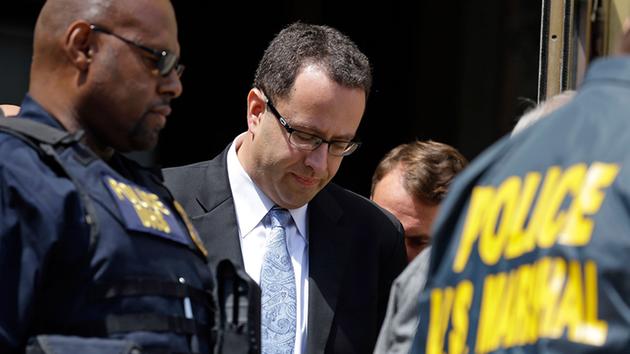
A New Hampshire judge on Friday ordered a former prep school student to begin serving a one-year prison sentence after violating his curfew in a high-profile case over sex at elite St. Paul's School.
The student, Owen Labrie, 20, was sentenced last year for felony luring as well as misdemeanor charges related to having a sexual encounter with a minor in a trial that shone a harsh light on the school and its student tradition of a "senior salute," in which students in their final year seek underclassmen for sexual encounters.
Labrie had been out on bail while a appealing his conviction to the New Hampshire Supreme Court. But Judge Larry Smukler ruled on Friday that he had violated a curfew that required him to be in his mother's home in Tunbridge, Vermont from 5 p.m. to 8 a.m.
Prosecutors contended that Labrie had violated these conditions repeatedly by traveling to Boston, in part to visit a girlfriend.
Labrie's attorney insisted that his trips to the Boston area were to meet with lawyers or for educational purposes.
Smukler rejected that argument.
"I don't know if you went down to Boston to consult with somebody, to meet with a girlfriend, or to pursue educational opportunities," Smukler said Friday. "There have been credibility issues throughout this trial."
Labrie was taken out of the courtroom in handcuffs.
Prosecutors had submitted documents indicating that Labrie repeatedly purchased bus tickets to and from Boston that necessitated violating his curfew.
Labrie's attorney, Jaye Rancourt, admitted that he traveled outside the curfew three times, but she said he was concerned about threats to his safety if his activities were publicized through a formal court motion seeking permission for the trips.
"Telling the public, telling the media, where your client is at all times is not safe," Rancourt said. "He chose, wrongly admittedly, to fly under the radar ... He's sorry for that."
St. Paul's is one of the nation's top prep schools, and its alumni include well-known figures in business and politics, including U.S. Secretary of State John Kerry.
(Reporting by Ted Siefer; Writing by Scott Malone; Editing by Tom Brown and Cynthia Osterman)
|

|
|
 North Korea has test-fired two ballistic missiles |
|
Posted by: IceWizard - 03-18-2016, 03:39 PM - Forum: World News
- Replies (6)
|
|

Reuters
US officials said the medium-range missiles, launched off the east coast, flew about 800km (500 miles) before falling into the water.
Afterwards, the US called for Pyongyang to refrain from raising tensions.
It comes a day after US President Barack Obama imposed new sanctions, following North Korea's "illicit" nuclear test and satellite launch.
His executive order freezes North Korean government property in the United States. It bans US exports to - or investment in - North Korea and also greatly expands powers to blacklist anyone, including non-Americans, dealing with North Korea.
The 6 January nuclear test and 7 February satellite launch were violations of existing UN sanctions, as are ballistic missile tests.
US defence officials said two launches had been tracked of what appeared to be Nodong missiles fired from road-mobile launch vehicles.
With a maximum range of 1,300km, the Nodong would have the capability to reach all of South Korea and parts of Japan.
North Korea's last Nodong test was in March 2014. Japanese PM Shinzo Abe condemned the launch and said his government would work with the US and South Korea to coordinate a response.
Lt Col Michelle Baldanza, from the US defence press office said: "We call on North Korea to refrain from actions that further raise tensions in the region."
Amid the heightened tensions, the North sentenced a US student to 15 years hard labour on Wednesday for "severe crimes" against the state.
The US demanded North Korea immediately release Otto Warmbier, 21, who was arrested for trying to steal a propaganda sign from a hotel while on a visit in January.
The US and South Korea are also holding their biggest annual military drills this month, which routinely generate tension. But this year North Korea threatened to launch a "pre-emptive nuclear strike of justice" against the US and South Korea.
North Korea's nuclear programme: How advanced is it?

North Korea's nuclear programme remains a source of deep concern for the international community. Despite multiple efforts to curtail it, Pyongyang says it has conducted four nuclear tests and there are indications it is developing long-range missile technology.
Has North Korea got the bomb?
Technically yes, but not the means to deliver it via a missile - yet.
North Korea said it conducted four successful nuclear tests in 2006, 2009, 2013 and 2016. Analysts believe the first two tests used plutonium, but whether the North used plutonium or uranium as the starting material for the 2013 test is unclear. While these three were atomic bomb tests, North Korea said its test in January 2016 was of a more powerful hydrogen bomb.
Again, the starting material is unclear and experts cast doubt given the size of the explosion registered.
H-bombs use fusion - the merging of atoms - to unleash massive amounts of energy, whereas atomic bombs use nuclear fission, or the splitting of atoms.
Shortly after that test Pyongyang launched a satellite, a launch widely seen as a test of long-range missile technology. The US said in February it had intelligence indicating that North Korea could soon have enough plutonium for nuclear weapons and was taking steps in making a long-range missile system.
What do we know about the North's nuclear programme?
The Yongbyon site is thought to be its main nuclear facility. The North has pledged several times to halt operations there and even destroyed the cooling tower in 2008 as part of a disarmament-for-aid deal.
However, the US never believed Pyongyang was fully disclosing all of its nuclear facilities - a suspicion bolstered when North Korea unveiled a uranium enrichment facility at Yongbyon, purportedly for electricity generation, to US scientist Siegfried Hecker in 2010.
In March 2013, after a war of words with the US and with new UN sanctions over the North's third nuclear test, Pyongyang vowed to restart all facilities at Yongbyon.
In 2015 a US think tank said satellite pictures suggested the reactor at Yongbyon may have been restarted. Then in September, state media announced that "normal operation" had started at the production plant.
The January 2016 test was said to have been carried out at the Punggye-ri site. Both the US and South Korea have also said that they believed the North had additional sites linked to a uranium-enrichment programme.
The country has plentiful reserves of uranium ore.
What has the global community done about this?
The US, Russia, China, Japan and South Korea have engaged the North in multiple rounds of negotiations known as six-party talks, but none of this has ultimately deterred Pyongyang.
In 2005, North Korea agreed to a landmark deal to give up its nuclear ambitions in return for economic aid and political concessions. But implementing it proved difficult and talks stalled in 2009.
Then in 2012, North Korea suddenly announced it would suspend nuclear activities and place a moratorium on missile tests in exchange for US food aid,. But this came to nothing when Pyongyang tried to launch a rocket in April that year.
The UN further tightened sanctions after the 2013 test.
The 2016 test brought another round of universal international condemnation, including from China, the North's main ally.
Did recent tests advance North Korea's nuclear capabilities?
After its 2013 test and again in 2015, North Korea claimed it had "miniaturised" a device, or made a device small enough to fit a nuclear warhead onto a missile - which the US cast doubt on.
Pyongyang also said the 2013 test had a much greater yield than the devices detonated in previous tests. It was indeed larger in force than previous ones, but monitors failed to detect radioactive isotopes - a key indicator - so uncertainty remains.
Claims of an underground test of a hydrogen bomb in January 2016 were met with plenty of scepticism. Initial estimates put the blast in the 10 to 15 kiloton range, whereas a full thermonuclear blast would be closer to 100 kilotons.
North Korea again claimed this was a successful test of a miniaturised device, and again it has not been verified.
|
|
|
|
| Hi everyone |
|
Posted by: cult89 - 03-18-2016, 02:17 PM - Forum: Welcome
- Replies (7)
|
 |
Hi,
I have been introduced to ioplist.org via googling a certain vendors credibility. Very excited to see good reviews and disappointed and reading a few negative reviews. but a great place !
|
|
|
|
 DNA Study Points to Prehistoric Hanky Panky With Neanderthals |
|
Posted by: IceWizard - 03-18-2016, 01:11 PM - Forum: World News
- Replies (1)
|
|
MAR 17 2016, 6:00 PM ET
by MAGGIE FOX
Ancient Eurasia saw more than a little prehistoric hanky panky, a new study shows. It finds the ancestors of modern humans interbred with Neanderthals and another type of prehuman not just once, but several times. And the genes of these ancient Neanderthals and Denisovans live on today, in modern Europeans, Asians and in the Melanesians of Papua New Guinea and other Australasian islands.
The study, published in the journal Science, helps confirm earlier theories that human ancestors didn't interbreed with other hominin species until after they left Africa. There's a barely a trace of Neanderthal in Africans living today.
But once they started moving across Europe and Asia, they not only lived side by side, they had a few run- ins.

Replica of the Denisovan finger bone on a hand.
 Max Planck Institute for Evolutionary Anthropology
"Different populations of people have slightly different levels of Neanderthal ancestry, which likely means that humans repeatedly ran into Neanderthals as they spread across Europe," said Svante Paabo of Max-Planck-Institute for Evolutionary Anthropology in Germany, who worked on the project and who was one of the first scientists to sequence the Neanderthal genome.
"SUBSTANTIAL AMOUNTS OF NEANDERTHAL AND DENISOVAN DNA CAN NOW BE ROBUSTLY IDENTIFIED IN THE GENOMES OF PRESENT- DAY MELANESIANS."
Paabo and colleagues sequenced DNA from 1,500 people from various ethnic groups around the world for the project.
They compared these sequences to those found in the remains of Neanderthals, who co- existed with modern humans in what is now Europe until about 30,000 years ago. They also used DNA taken from what are called the Denisovans — early humans identified through tiny scraps of bone and tooth found in a remote cave in Siberia in 2008.
They found patterns of inheritance that might help them track the movements of such early humans across the globe.
"Most people know back a few generations, maybe five generations," said David Merriwether of Binghamton University in New York, who worked on the study. "But where did we come from before that? That's what we want to find out."
This study gives some clues that show a lot of interaction between human sub-species back in prehistoric days.

This cave in Siberia yielded bone scraps that turnedout to be a new species of early human - the Denisovans
 Max Planck Institute for Evolutionary Anthropology
"Substantial amounts of Neanderthal and Denisovan DNA can now be robustly identified in the genomes of present- day Melanesians, allowing new insights into human evolutionary history," they wrote. "I think that people (and Neanderthals and Denisovans) liked to wander," said Benjamin Vernot, a University of Washington postdoctoral student in genomic sciences who helped lead the project. "And yes, studies like this can help us track where they wandered."
They found patterns that show there wasn't just one random coupling that led to a single ancestor of many people alive today, but several.
"Consequently, all non-African populations derive around 2 percent of their ancestry from Neanderthals, whereas substantial levels of Denisovan ancestry (around 2-4 percent) are only found in Oceanic populations," they wrote.
"DENISOVANS ARE THE ONLY SPECIES OF ARCHAIC HUMANS ABOUT WHOM WE KNOW LESS FROM FOSSIL EVIDENCE AND MORE FROM WHERE THEIR GENES SHOW UP IN MODERN HUMANS."
"We find significant evidence of Denisovan ancestry in our Melanesian samples, with admixture proportions varying between 1.9 percent and 3.4 percent."
This supports the theory that the ancestors of modern Melanesians came across what is now western Russia into Asia and then migrated across the vast oceans to where they live now.
"Denisovans are the only species of archaic humans about whom we know less from fossil evidence and more from where their genes show up in modern humans," said Joshua Akey of the University of Washington, who led the study.
But that's not all.
"We find evidence for an additional pulse of Neanderthal admixture in Europeans, East Asians, and South Asians compared to Melanesians," the researchers wrote.
"Collectively, these data suggest Neanderthal admixture occurred at least three distinct times in modern human history."
What the DNA cannot tell us is how those matings occurred. It may have been rape, conquest, or something more complex.
"It was apparently separate events, so not just one single happy party at some point," evolutionary biologist Alan Cooper of the University of Adelaide in Australia, who was not part of the new study, told the journal Science.
Science also cannot say why modern humans outlived the Neanderthals, Denisovans and perhaps other early humans yet to be discovered. It's possible modern human ancestors killed them off, but equally possible that a small genetic advantage simply allowed modern humans to outbreed their cousins.
Genetically, the Denisovans seem similar to Neanderthals. Bones show the Neanderthals were intelligent but stockier than modern humans.
Other evidence showed they used art and made jewelery, and DNA suggests they may have given humans at least some immune system advantages, as well as red hair and a tendency to allergies.
Whatever DNA survived probably offers an advantage, or else it would have been weeded out by natural selection, the researchers say.
Big stretches of modern human DNA from people around the world are clear of any Denisovan or Neanderthal sequences, the researchers said.
These are regions associated with language, as well as the tendency to autism.
|
|
|
|
| Allow me to introduce myself... |
|
Posted by: Scarlett77 - 03-18-2016, 01:43 AM - Forum: Welcome
- Replies (3)
|
|
Hi everyone! Very pleased that I discovered this forum today. I have been hoping to find something like this. Â I am a little intimidated And worried I will say something wrong and get banned. Anyways hello all . I am scouring your posts
|
|
|
|
| Allow me to introduce myself... |
|
Posted by: Scarlett77 - 03-18-2016, 01:16 AM - Forum: Welcome
- Replies (6)
|
|
Hi everyone! Very pleased that I discovered this forum today. I have been hoping to find something like this. Â I am a little intimidated And worried I will say something wrong and get banned. Anyways hello all . I am scouring your posts
|
|
|
|
|
Patients Paying $3 Billion for Wasted Cancer Drugs |
|
Posted by: IceWizard - 03-17-2016, 12:28 PM - Forum: World News
- Replies (1)
|
|
MAR 16 2016, 6:38 PM ET
by LAUREN DUNN and ANNE THOMPSON

Cancer drug Avastin
Cancer drugs are a major advance in medicine — they are life-saving, expensive and, according to a recent study, wasted. This year alone, a projected $3 billion will be wasted on leftover cancer drugs that are simply being thrown away, a new study by Memorial Sloan Kettering Cancer Center concluded.
American patients are paying the price for these unused drugs, Dr. Peter B. Bach, director of the Center for Health Policy and Outcomes at the Memorial Sloan Kettering Cancer Center tells NBC News. "I don't think most patients are aware of this and I really hope patients with cancer can focus on things much more important than how companies are packaging their drugs," says Bach. "But, the truth is, patients are paying for it and we need to worry about it. We have to address this problem."
Drug companies in the U.S. distribute intravenous cancer drugs in single vials that contain more medicine than many patients will need.
The leftover drug is often thrown away, creating a multi-billion dollar waste.
The U.S. government plays no role in regulating drug prices or how doctors and hospitals can profit, according to the study. In Europe, doctors and hospitals are allowed to match a patient's required dose in smaller vials.
"I DON'T THINK MOST PATIENTS ARE AWARE OF THIS AND I REALLY HOPE PATIENTS WITH CANCER CAN FOCUS ON THINGS MUCH MORE IMPORTANT THAN HOW COMPANIES ARE PACKAGING THEIR DRUGS"
Researchers investigated the top 20 cancer drugs that are packaged in single dose vials and administered based on body size.
Together the medications account for 93 percent of cancer drug sales.
To determine leftover doses, the report used projected data from federal Medicare claims and from the National Health and Nutrition Examination Survey.
In 2016, insurers are expected to pay drug makers an extra $1.8 billion for cancer drugs which are discarded. Another $1 billion will go to hospitals and doctors due to price markups of the drug, the MSK researchers found.

Safety standards allow sharing only if the leftover drug is used within 6 hours and only in specialized pharmacies. However, there are not always patients available to use the leftover medication within that restriction. Based on the data, only six to 36 percent of the leftover vials of the top 20 cancer drugs were shared.
"WE HAVE TO ADDRESS THIS PROBLEM"
Drug companies should offer more varied packaging, Bach says. "The solution to the problem is having the company sell them in sizes where there is no leftover."
In a statement to NBC News, biotech company Genentech said:
"All of our medicines are packaged to meet FDA regulations. The FDA calls on companies to balance vial contents so that leftover drug is minimized yet also provide enough drug so that more than one vial is rarely needed for a single dose."
In addition, the pharmaceutical industry trade group PHRMA responded to NBC News in a statement: "The drug development and manufacturing process for biologics, including oncology medicines, is extremely complex.
Decisions regarding vial size are tied to a product's initially approved dosage and labeled use, taking into account that different patients will have different needs. Vial fill size must be approved by FDA as part of the sponsor's drug application and any excess volume must meet FDA standards outlined in regulations."
TOP 2O INTRAVENOUS CANCER DRUGS PROJECTED 2016 REVENUE FROM LEFTOVER DRUGS (SINGLE DOSE VIALS)
Source: Bach et al, BMJ, 1 March 2016
BREAST CANCER Abraxane (Paclitaxel protein bound): $76.72bmillion
Halaven (Eribulin): $21.85 million
Kadcyla (Ado-trastuzumab emtansine): $23.66 million
CHRONIC LYMPHOCYTIC LEUKEMIA Treanda (Bendamustine): $7.38 million
COLORECTAL Avastin (Bevacizumab): $284.49 million
Vectibix (Panitumumab): $18.72 million
GASTRIC Cryamza (Ramucirumab): $28.78 million
HEAD/NECK Erbitux (Cetuximab): $29.18 million
LYMPHOMA Adcetris (Brentuximab vedotin): $29.15 million
MELANOMA Keytruda (Pembrolizumab): $197.94 million
Opdivo (Nivolumab): $68.93 million
Yervoy (Ipilimumab): $46.47 million
MESOTHELIOMA Alimta (Pemetrexed): $54.64 million
MYELOMA Kyprolis (Carfilzomib): $231.45 million
Velcade (Bortezomib): $308.74 million
NEUTROPENIA Neupogen (Filgrastim): $106.01 million
NON-HODGKIN'S LYMPHOMA Rituxan (Rituximab): $253.85 million
PANCREATIC Onivyde (Irinotecan liposome): $7.13 million
PROSTATE Jevtana (Cabazitaxel): $26.89 million
ALL TYPES OF CANCER Erwinaze (Asparaginase Erwinia chrysanthemi): $14.13 million
|
|
|
|
 From Tiny to T. Rex: Modest Forerunner of Huge Predator Found |
|
Posted by: IceWizard - 03-17-2016, 12:09 PM - Forum: World News
- No Replies
|
|
MAR 14 2016, 3:33 PM ET
by REUTERS

ORIGINAL PAINTING BY TODD MARSHALL
Fossils unearthed in northern Uzbekistan's remote Kyzylkum Desert of a smaller, older cousin of Tyrannosaurus rex are showing that the modest forerunners of that famous brute had already acquired the sophisticated brain and senses that helped make it such a horrifying predator.
Researchers said on Monday the horse-sized Cretaceous Period dinosaur, named Timurlengia euotica, that roamed Central Asia 90 million years ago sheds new light on the lineage called tyrannosaurs that culminated with T. rex, which stalked North America more than 20 million years later.
The researchers used CT scans to look inside Timurlengia's braincase and digitally reconstruct its brain, sinuses, nerves, blood vessels and inner ear. The make-up of the inner ear indicated Timurlengia, like T. rex, excelled at hearing lower frequency sounds.
Timurlengia was relatively small but boasted the advanced brain and senses of the colossal apex predators like Tyrannosaurus rex that lived at the end of the dinosaur age, paleontologist Steve Brusatte of Scotland's University of Edinburgh said.
"This tells us that tyrannosaurs got smart before they got big."
These traits came in handy when tyrannosaurs had the opportunity to rise to the top of the food chain and become very big after other large dinosaur predator groups disappeared.
Timurlengia, named for 14th century Central Asian conqueror Tamerlane, was 10-13 feet (3-4 meters) long and about 600 pounds (270 kg). T. rex reached about 42 feet (13 meters) and 7 tons.
Paleontologist Hans-Dieter Sues of the Smithsonian Institution's National Museum of Natural History in Washington said Timurlengia was a nimble, long-legged pursuit hunter and probably a better runner than T. rex.
"Timurlengia would be a frightening creature, in the same way that a lion is pretty frightening to us," Brusatte said. "But if you were somehow transported into an alternate dimension and had a choice between facing down a Timurlengia or a T. rex, you would go with Timurlengia anytime."
Tyrannosaurs appeared about 170 million years ago and initially were roughly a person's size.
Before Timurlengia's discovery, there had been a gap in the tyrannosaur fossil record between about 100 and 80 million years ago that had left questions about their evolution.
The fact Timurlengia was still relatively small 80 million years after tyrannosaurs first appeared showed their immense size occurred suddenly, late in their evolutionary history.
"Tyrannosaurs only became really big about 80 million years ago," Sues said.
The research appears in the Proceedings of the National Academy of Sciences.
|
|
|
|
|